
Category: Tretinoin
How to Use Tretinoin Properly: A Beginner’s Night Routine (UK Guide)
Tretinoin (also known as retinoic acid) is one of the most effective prescription treatments for acne, pigmentation, and skin ageing. However, using it incorrectly is one of the main reasons people experience irritation, breakouts, and poor results.
This guide explains exactly how to use tretinoin properly, step by step, so you can get results with less dryness and disruption. If you want a safe way to start in the UK, you can view our tretinoin options here: https://rootandradiance.co.uk/tretinoin/
What is tretinoin and why routine matters
Tretinoin increases skin cell turnover, helps prevent blocked pores, and supports collagen over time. Because it changes how your skin behaves at a cellular level, it needs a steady introduction and a barrier-friendly routine.
- Reduces breakouts by keeping pores clear
- Improves texture and tone over time
- Helps fade dark marks gradually
- Supports long-term skin renewal
When should you start tretinoin?
If you are new to tretinoin, begin with a lower strength and use it fewer nights per week at first. Most beginners do best starting at 0.025% and increasing slowly as tolerance improves.
The best beginner tretinoin night routine (step by step)
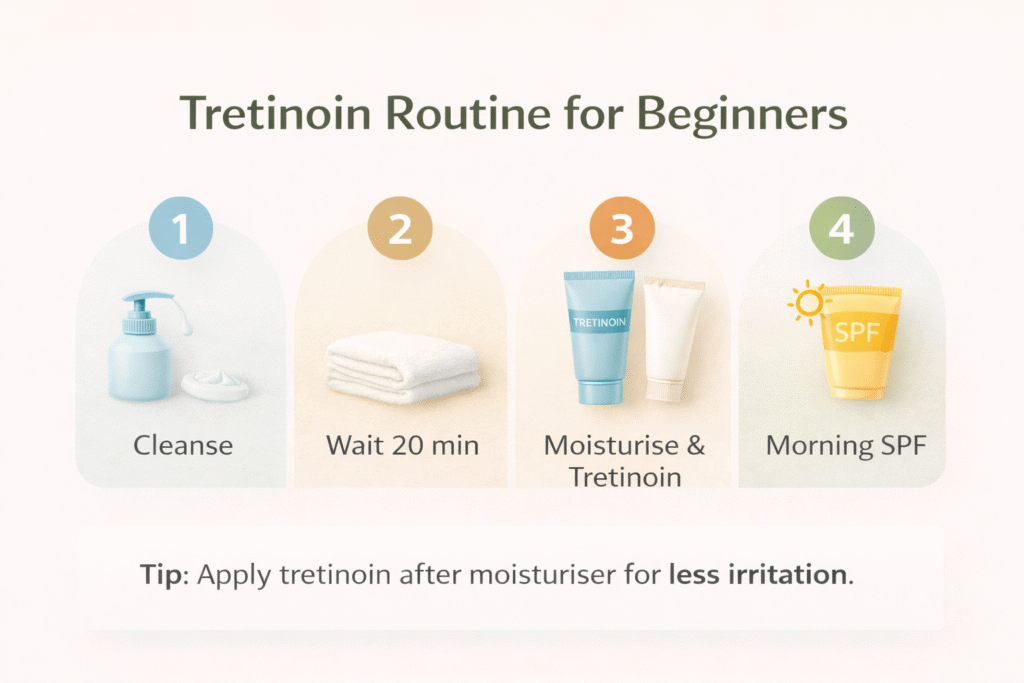
Step 1: Cleanse gently
Use a mild cleanser that leaves your skin comfortable, not tight. Avoid scrubs and strong exfoliating cleansers when starting tretinoin.
Step 2: Wait until skin is fully dry
After cleansing, wait around 15 to 20 minutes. Applying tretinoin to damp skin increases penetration and irritation.
Step 3: Apply a thin layer of moisturiser (sandwich method)
For beginners, the sandwich method helps reduce dryness:
- Moisturiser layer
- Wait 5 minutes
- Tretinoin layer
- Moisturiser layer
Step 4: Apply tretinoin (pea-sized amount)
Use a pea-sized amount for the whole face. Dot it across forehead, cheeks, and chin, then spread gently. More product does not work faster, it just increases irritation.
Step 5: Moisturise again
Finish with a moisturiser to support the skin barrier overnight. Barrier support is one of the simplest ways to reduce side effects.
How often should you use tretinoin?
Use frequency as your main lever. Increase slowly.
| Timeframe | Suggested frequency | Goal |
|---|---|---|
| Weeks 1 to 2 | 2 nights per week | Build tolerance, reduce irritation |
| Weeks 3 to 6 | 3 nights per week | Consistency without overload |
| Weeks 7 to 12 | Every other night | Visible improvement phase |
| After 3 months | Every other night or nightly if tolerated | Long-term results and maintenance |
Morning routine when using tretinoin
Your morning routine should be simple and protective.
- Gentle cleanse (or rinse if your skin is dry)
- Moisturiser
- SPF 30+ every morning
Daily SPF supports results and helps reduce irritation. It also helps prevent pigment from becoming more noticeable.
What to avoid when starting tretinoin
The first 8 to 12 weeks are about building tolerance. Keep your routine calm and avoid stacking too many actives.
- Strong AHA or BHA exfoliants in the same routine
- Physical scrubs and cleansing brushes
- Alcohol-heavy toners
- Retinol or retinal products on top
- Benzoyl peroxide in the same routine (unless advised)
Common beginner mistakes
- Using too much: more product increases irritation
- Starting too often: frequency should increase slowly
- Skipping moisturiser: barrier support improves tolerance
- Not using SPF: slows progress and worsens redness and pigment
- Quitting too early: real improvement usually appears after 8 to 12 weeks
Is purging normal?
Some people experience “purging” as clogged pores come to the surface earlier. This typically settles by weeks 6 to 8. If you want a deeper explanation, read: tretinoin side effects, purging, and how to reduce irritation.
If you are unsure whether you are purging or reacting, reduce frequency and speak to your prescriber for guidance.
Ready to start tretinoin safely in the UK?
View strengths and begin your online consultation. A prescriber reviews your answers and confirms suitability before supply.
Frequently asked questions
Should I apply tretinoin before or after moisturiser?
Beginners often do best applying moisturiser first, then tretinoin, then moisturiser again. This is called the sandwich method and can reduce irritation.
How much tretinoin should I use?
Use a pea-sized amount for the whole face. Using more does not speed up results and can cause unnecessary irritation.
How many nights per week should I start with?
Start with 2 nights per week for the first 1 to 2 weeks, then increase gradually if your skin is tolerating it.
Do I need SPF while using tretinoin?
Yes. Daily SPF is strongly recommended. It protects your skin and helps reduce redness and pigment issues while your skin adapts.
When should I reduce frequency or stop?
If your skin feels raw, burns, or is cracking, reduce frequency and simplify your routine. If severe symptoms continue, seek advice from your prescriber.