
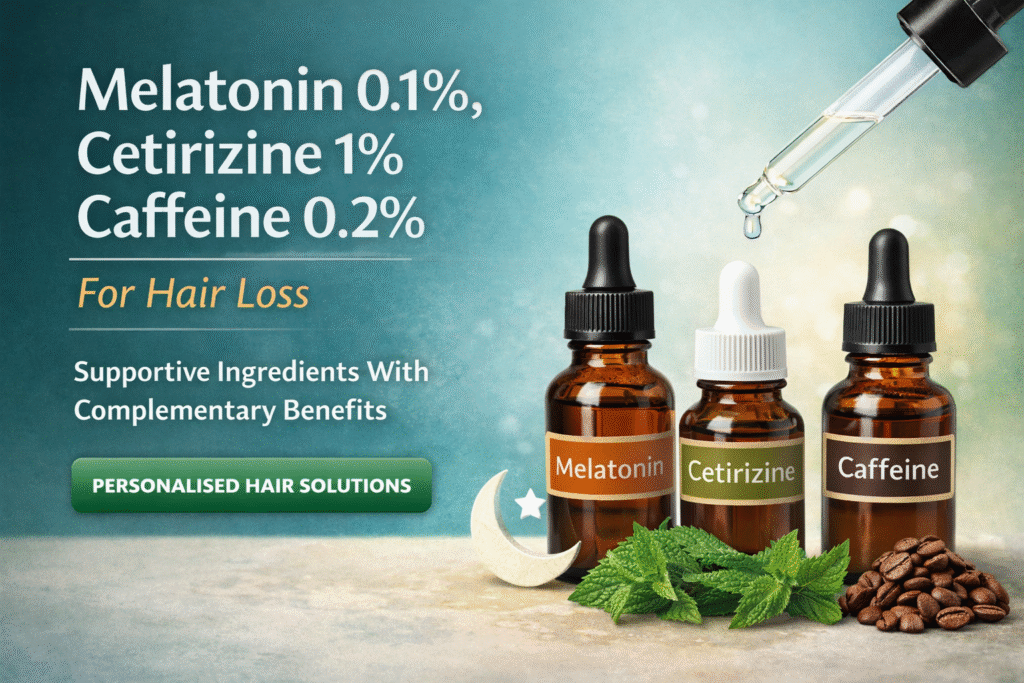
Melatonin 0.1%, Cetirizine 1% and Caffeine 0.2% for Hair Loss. Why This Combination Is Gaining Attention
Topical hair loss treatments are becoming increasingly personalised. While minoxidil remains one of the best known options, many people are now exploring alternative or complementary actives that may help support the scalp and hair follicle in different ways.
Three ingredients attracting growing interest are melatonin 0.1%, cetirizine 1%, and caffeine 0.2%. When used in a well-designed topical solution, these ingredients may help support the scalp environment, improve hair quality, and form part of a broader personalised treatment plan.
In this article, we explain the potential benefits of melatonin, cetirizine, and caffeine for hair loss, who may benefit from this type of formula, and how to build a more tailored treatment route.
Looking for a personalised hair loss formula?
Use our Hair Customiser to explore a tailored approach based on your goals, scalp needs, and preferred active ingredients.
Why Interest in Non-Minox Hair Formulas Is Growing
Not everyone wants the same hair loss treatment. Some people are looking for a more supportive formulation to use alongside other therapies, while others may want a personalised option when standard topical products have not been ideal for their scalp or treatment goals.
This is where ingredients such as melatonin, cetirizine, and caffeine can become especially interesting. Rather than relying on a single mechanism, these ingredients are often discussed because they may support hair growth through different pathways.
Potential Benefits of Melatonin 0.1% for Hair Loss
Melatonin is best known as the hormone associated with sleep, but it is also of interest in hair science. The hair follicle is a highly active mini-organ, and melatonin has been studied for its potential role in supporting follicular function and helping maintain a healthier hair growth cycle.
Potential benefits of topical melatonin 0.1% may include:
- Supporting the natural hair growth cycle
- Helping promote a healthier scalp environment
- Providing antioxidant support around the follicle
- Potentially improving hair density and shedding patterns over time
Melatonin is often of interest in early hair thinning and in people who want a formula that focuses on scalp support as well as visible hair quality.
Potential Benefits of Cetirizine 1% for Hair Loss
Cetirizine is commonly recognised as an antihistamine, but topical cetirizine has also been explored in hair loss formulations, particularly in androgenetic alopecia. One reason it attracts interest is its potential relationship with inflammatory and prostaglandin pathways that may influence the hair follicle environment.
Potential benefits of topical cetirizine 1% may include:
- Supporting a calmer scalp environment
- Helping improve hair density in some individuals
- Potentially supporting thicker-looking hair over time
- Offering an alternative or complementary pathway within a personalised regimen
For people exploring options beyond standard hair loss products, cetirizine 1% has become an increasingly talked-about ingredient in personalised topical solutions.
Potential Benefits of Caffeine 0.2% for Hair Loss
Caffeine is a familiar ingredient in many cosmetic and scalp care products. In hair formulations, it is often included because of interest in its potential to support follicular activity and scalp vitality.
Potential benefits of topical caffeine 0.2% may include:
- Supporting scalp stimulation
- Helping improve the feel and condition of the scalp
- Contributing to a more energised follicular environment
- Working as part of a broader personalised hair solution
Caffeine is often chosen for people who want a more supportive cosmetic-active ingredient within their daily scalp routine. It is especially attractive in combination formulas where the aim is to support the scalp through multiple complementary mechanisms.
Why Combine Melatonin, Cetirizine and Caffeine?
A combination formula can be appealing because these ingredients are often discussed for different but potentially complementary reasons.
Melatonin for follicle support
Melatonin is often associated with antioxidant support and the regulation of the hair cycle.
Cetirizine for scalp pathway support
Cetirizine has attracted attention in hair loss because of its potential relationship with scalp signalling pathways involved in androgenetic alopecia.
Caffeine for scalp vitality
Caffeine is often added to support a more active, energised scalp environment.
Together, a formula containing melatonin 0.1%, cetirizine 1%, and caffeine 0.2% may appeal to those looking for a more rounded topical hair solution rather than a single-ingredient approach.
Who Might Consider This Type of Formula?
This kind of personalised topical hair solution may be of interest to people who:
- Have early or established hair thinning
- Want a more tailored topical approach
- Prefer a formula built around multiple supportive ingredients
- Are exploring options beyond standard off-the-shelf products
- Want a solution designed around scalp comfort, goals, and treatment preferences
As with any hair treatment, suitability depends on the individual, the type of hair loss involved, and the wider treatment plan.
Why Personalised Hair Loss Formulas Matter
Hair loss is rarely one-size-fits-all. Some people prioritise scalp comfort, some want a broader ingredient profile, and others want a treatment plan that fits around their current routine.
That is why personalised compounding can be so useful. It allows flexibility in:
- Ingredient selection
- Strength
- Vehicle or formulation base
- Overall treatment approach
A carefully chosen custom formula can help align treatment more closely with your scalp needs and hair goals.
How Long Can Hair Treatments Take to Show Results?
Hair treatment requires patience and consistency. The hair growth cycle moves slowly, so improvements are usually assessed over months rather than weeks.
Around 3 months
Some people begin to notice changes in shedding or scalp feel.
Around 4 to 6 months
Visible changes in density or overall hair appearance may start to become more noticeable.
Around 9 to 12 months
Longer-term results are usually assessed over a sustained period of regular use.
As always, consistency is important, and any topical hair treatment should be reviewed as part of an appropriate clinical pathway.
Build Your Personalised Hair Formula
At Root & Radiance, we believe hair care should be tailored. If you are interested in a more personalised topical solution, our Hair Customiser allows you to explore treatment options based on your goals and preferences.
Whether you are interested in melatonin, cetirizine, caffeine, or a broader personalised route, you can start building your formula online.
Frequently Asked Questions
What are the benefits of melatonin 0.1% for hair?
Topical melatonin 0.1% is of interest because it may help support the hair growth cycle, provide antioxidant support around the follicle, and contribute to a healthier scalp environment.
What does cetirizine 1% do in a hair solution?
Topical cetirizine 1% has attracted attention in hair loss formulations because of its potential relationship with scalp pathways involved in hair thinning. It may help support density and overall scalp balance in some individuals.
Why is caffeine 0.2% used in hair formulas?
Caffeine 0.2% is often included in topical hair products to support scalp vitality and contribute to a more active follicular environment as part of a broader personalised regimen.
Can melatonin, cetirizine and caffeine be used together in one formula?
Yes, these ingredients can be considered together within a personalised topical hair solution, depending on the formulation design and individual treatment pathway.
Can I build a personalised hair formula online?
Yes. Root & Radiance offers an online Hair Customiser that allows you to explore a more tailored route to treatment based on your goals and preferences.
Final Thoughts
A formula containing melatonin 0.1%, cetirizine 1%, and caffeine 0.2% reflects the growing move toward more personalised topical hair care. Rather than relying on a one-size-fits-all product, this type of solution may appeal to those who want a more tailored and multi-pathway approach to supporting the scalp and hair follicle.
If you are exploring a personalised route, the best place to start is with a formula designed around your own needs and preferences.
Disclaimer
This content is for general informational purposes only and does not constitute medical advice. Treatment suitability varies between individuals. Always follow guidance provided during your clinical assessment and prescribed treatment plan.