
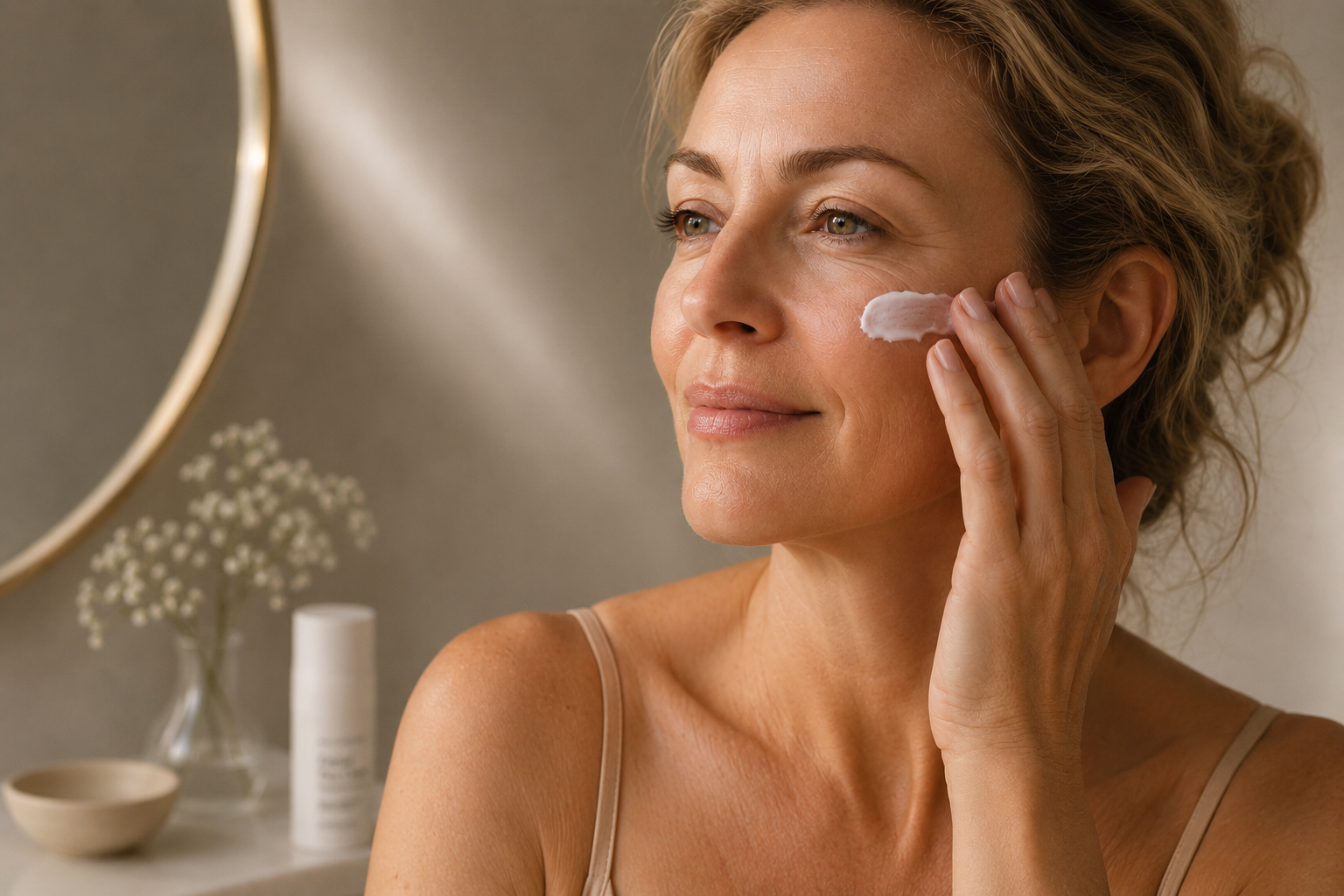
Skin changes during perimenopause and menopause
Explore care options for dryness, sensitivity and changes in skin texture, with an individual assessment of your concerns and medical history.
Start with an individual assessment.
Tell us about the changes you have noticed, how long they have been present and what you would like help with.
The consultation asks about your menopause stage, medical history, medicines and current skincare, so a clinician can consider your circumstances.
What happens next?
A UK registered prescriber reviews your answers and examination photos to assess whether treatment is appropriate.
A prescription is not guaranteed. Depending on your circumstances, the clinician may recommend everyday skincare, further assessment or no prescription treatment.
If a medicine is considered, its suitability, potential benefits and risks need to be assessed for you individually.
This consultation is currently unavailable.
Menopause can change the way skin looks and feels.
Hormonal changes around menopause can affect skin hydration, thickness and elasticity. Experiences vary, and ageing, sun exposure and existing skin conditions can also influence how your skin looks and feels.
Dryness
Skin may retain less moisture and feel dry or tight. Gentle cleansing and regular moisturising can help with comfort.
Firmness
Changes in collagen and elasticity can make skin feel less firm. These are common changes and do not necessarily need treatment.
Texture
Dryness, natural ageing and previous sun exposure can contribute to a rougher texture or more visible fine lines.
Sensitivity
Skin may become more easily irritated. A gentle, fragrance-free routine may help; persistent irritation should be assessed.
Discussing your options.
Decisions about medicines require an individual clinical assessment, taking account of licensing status, the available evidence, alternatives and medical history. Information about a medicine does not establish that it is suitable for you.
Requesting a medicine does not mean it will be prescribed. Everyday skincare, further assessment or no prescription may be more appropriate.
Tell the clinician about your medicines and hormone treatments, allergies and relevant medical history.
Your consultation, step by step.
Tell us about your skin
Complete an online questionnaire about your skin, menopause stage, medical history and treatment goals.
Clinical review
A UK registered prescriber reviews your answers and examination photos to assess whether treatment is appropriate.
An individual outcome
The outcome may be advice, further assessment or treatment. A consultation does not guarantee a prescription.
If treatment is prescribed
Our pharmacy partner dispenses the prescribed treatment for discreet delivery, with instructions for use.
Caring for your skin around menopause.
Changes in skin appearance do not automatically need medical treatment. You can choose to keep your current routine, make simple skincare changes or seek advice about concerns that affect your comfort.
Start with gentle skincare
A mild cleanser and a fragrance-free moisturiser can help dry, easily irritated skin feel more comfortable. If a product causes irritation, stop using it and ask a pharmacist or clinician for advice if symptoms persist.
Protect your skin from the sun
Use shade and protective clothing alongside a broad-spectrum sunscreen with SPF 30 or higher. Follow the sunscreen’s application and reapplication instructions.
Consider the options that suit you
Non-prescription skincare may be enough for your needs. If symptoms persist, a clinician can assess the cause and discuss appropriate options. Choosing no treatment for normal changes in appearance is also valid.
Read the American Academy of Dermatology’s menopause skincare advice.
When to seek medical advice
Speak to your GP about a persistent rash or a worsening skin condition. Arrange a GP assessment if a mole changes size, shape or colour, becomes painful or itchy, or bleeds or crusts. These changes should not be assumed to be caused by menopause.
Read NHS advice about moles and when to see a GP.
Share your current medicines and treatments
If you seek a consultation, tell the clinician about your skincare, medicines, hormone treatments, allergies and medical history. Do not change prescribed hormone treatment without advice from the clinician managing it.
Frequently asked questions
Talk to us about your skin concerns.
Share the changes you have noticed and your medical history through our Menopause & Skin Changes Consultation. A clinician will assess your individual circumstances and whether treatment is appropriate. A prescription is not guaranteed.